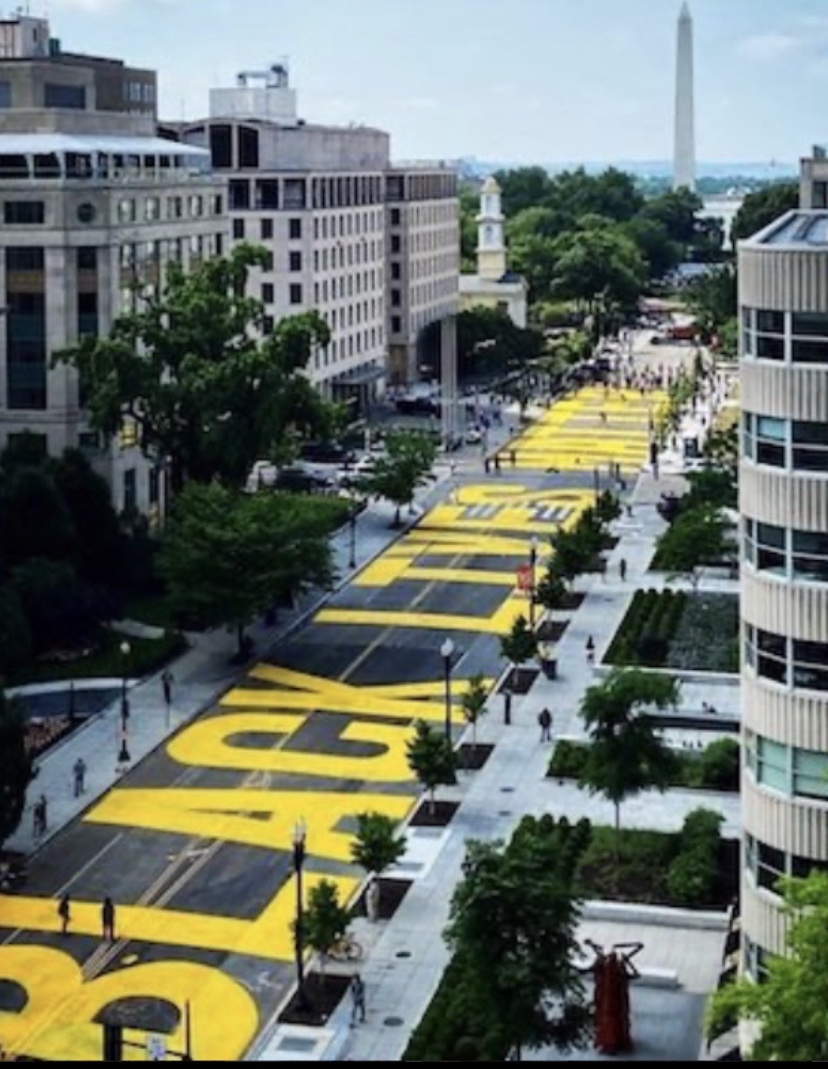
No matter where you stand on issues of policing, protesting, and racism, we can all agree that we have work to do as a nation. And no matter how much progress that you feel we’ve made since the first Juneteenth 155 years ago, it’s clear that too many people still don’t feel safe, heard, or fairly treated.
So as I reflect on this defining moment in history, I’d first like to say to my black friends and colleagues:
I’m listening and I hear you. Black lives more than just “matter” to me. They are important. What you’ve had to endure is simply wrong and it needs to be better. I will be here with you working towards a brighter future.
But I also need to admit a few unfortunate truths about myself. I admit that the issues that I write passionately about today were not priorities on my privileged radar a month ago. I’ll also admit that at times throughout my life I’ve held prejudice thoughts, uttered ignorant generalizations, dismissed systemic issues, and allowed others to do the same.
My lack of knowledge on black history and social injustice led to a lack of understanding. My lack of understanding led to a lack of compassion. My lack of compassion led to a lack of personal accountability. And my lack of accountability led to missed opportunities to make a positive impact. I was inherently benefitting from the way our system is set up, so I rarely had to think, talk, do, or learn much about racism at all. And since learning is optional, conversation is uncomfortable, white privilege is embarrassing, and action is inconvenient, it was easier for me to just avoid getting involved all together.
But the events of June 2020 made it impossible to ignore any longer. And my friends’ and colleagues’ personal stories made it unacceptable to stay passive. I began to listen and learn, and as I did, I kept coming back to one key take away:
I’ve been part of the problem. So if I want things to be better, I need to be part of the solution.
Rather than point blame on others and suggest naive solutions to complex, nuanced, and deeply systemic problems, I recognize the need to first look within and see where I can personally be better. In order to effectively demand change from others, I need to work for and become the change myself. Whether I was ready or not, June 2020 presented an opportunity to challenge my own biases, engage in my own conversations, and take my own actions. So that’s what I’m doing.
To challenge my own biases, I read articles, streamed videos, watched documentaries, listened to podcasts, and personally reflected on how I viewed race. Prior to June, I would’ve considered myself “one of the good guys” and even an ally when it comes to racism simply because I have black friends, I appreciate black culture, and I admire many black celebrities and leaders. But good relationships and good intentions haven’t made me immune to believing bad stereotypes. Fortunately, the more I learned, the more those stereotypes appeared incomplete or flat out unfair. For example:
I’ve always wanted life, liberty, and the pursuit of happiness for all. But podcast episodes with Heather McGhee and Ibram X Kendi taught me about long standing racist laws, concepts like “Redlining,” and unfair banking and hiring practices that make this pursuit of happiness way more difficult than I initially thought.
I want all communities to be as safe as the one I grew up in. But as a little kid running around in a Batman costume, I was taught from an early age that safety would be achieved by getting “bad guys” off the streets and putting them in jail. However, documentaries like 13th have helped me realize that this way of thinking has reinforced a broken criminal justice system and led to mass incarceration, which have actually caused many of the safety problems that we have in communities today.
I want to see talented young black people rise to levels of great success. However, I unfairly assumed that many problems we see today would be fixed if young black men acted more like Barack Obama, Denzel Washington, or Will Smith. A webcast put together by my company’s Black Professional Network helped me realize how unfair and narrow minded that this suggested standard is.
I want to see less police brutality, but until listening to episodes about police unions and a deeply intertwined court system on “The Daily” podcast, I realized the need to fix a grossly mismanaged orchard rather than just remove a few bad apples.
I want “racism” to go away, but I had always just considered racism the demeaning actions and harsh words from a small group of bigots, or the heinous things you see in history books and movies. But when I read the book, White Fragility, I realized all of the ways that we subconsciously contribute to this social construct.
My intentions and hopes for a brighter future haven’t changed, but new perspectives and information have corrected assumptions that were taking my focus away from the real problems. But just reading books, listening to podcasts, and watching videos could only get me so far. For instance, I absolutely love the new series with Emmanuel Acho, “Uncomfortable Conversations with a Black Man,” but it wouldn’t be as impactful until I had my own uncomfortable conversations with black friends.
So over the past few weeks, I’ve joined discussions in both facilitated groups and private conversations. While the content and themes in the discussions were consistent with what I was reading and watching, I found a new level of empathy when the narrative came from the heart of someone I know and care about. This was especially powerful when I realized that people that I have admired have also been exposed to many of the same brutal experiences you read about in the books and see in the documentaries.
It was in these conversations that I learned nobody is fully exempt from racism regardless of their success, environment, or social network.
For example, I learned how it feels for the one or two black friends in a predominately white group when they are said to have a “white personality.” What the heck is a white personality anyway?
I learned how disappointing it was for the most talented singer in my high school when she didn’t get a leading role in the musical because the leads were written and reserved for white characters. Imagine how much better the play would’ve been if the best possible cast was put on the stage.
I learned from Senior Leaders at my company about how it feels to be seen as a top performer at headquarters, but seen as “just another black guy” by the cops on the commute home. How can the same person be seen so differently in these two environments?
I learned how it feels for my black colleagues when they get a promotion that they worked hard for, but then second guess whether their peers think they deserve it. How did you feel the last time you were promoted?
At times during these conversations, I wanted to get defensive or justify my thinking. At times, I wanted to make it clear that I’m not racist. But with each conversation, I got a little better at listening, thinking, feeling, and reflecting. These powerful conversations will stick with me for a long time, but they can’t stop now. I realize that in order to sustain the level of empathy that is needed from active allies, I will need to stay engaged on a regular basis.
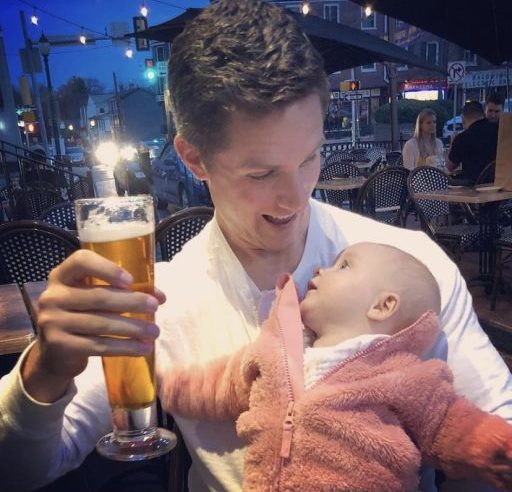
And those haven’t been the only uncomfortable conversations I’ve had. I’ve had some tough but really powerful discussions with my white friends and family too. For years, we never really discussed our views on racism or how society got to where it is today. If we did in the past, it would most likely be a case of biased assumptions reinforced with similar biased assumptions. But all of the information that is being shared has challenged our thinking, and thus we’ve been able to better challenge each other in conversation. We don’t always agree in these discussions, and it will take some people longer to move from their initial opinions and embrace the new perspectives. Nevertheless, the more we’ve opened up the floor for dialogue, the more thoughtful and understanding we’ve been as a collective family or a group. And I’ll admit that in some conversations, I’m the one challenging, and in other conversations I’m the one being challenged. Jordan and I see the importance of having these conversations on a regular basis with Charlie in the future…she just has to learn a few more words first.
A common theme through the content I’m consuming and the conversations I’m having is greater recognition of the unique privileges that I’ve had throughout my life. For example, I am privileged just to learn about racism from articles, documentaries, storybooks, and compelling conversations, whereas my black friends often learn about it through traumatic personal experiences. When I jog through nearby neighborhoods, “racism” to me is a concept on a podcast, whereas for Ahmaud Arbery, it was a cause of death. I get to feel guilty for my inherent advantages of whiteness rather than be presumed guilty by a biased justice system. I get to worry about the qualifications on my application rather than worrying about the impression my name may give on my application. I get to drive down the road worried about getting caught in traffic rather than what will happen if I get pulled over. I get to strive to be more inclusive rather than worry if I’ll be included. Most of all, I get to be judged first by my character and my merit rather than the color of my skin. Recognizing privilege won’t solve all the world’s problems, but it needs to be acknowledged before I can begin to truly understand the issues and formulate real solutions that can help us progress.
Learning and listening has helped me recognize my biases, withhold unfair judgment, and gain a deeper understanding of the context and complexities that drive the outcomes and emotions in our society. More than anything, my learning made me realize how much more there is to continue to learn. Challenging my biases has been a humbling experience, but it was an important first step in sparking the change in myself before I ask it from others. And knowing what I know now, it’ll finally be uncomfortable to NOT join the conversations, it’ll be embarrassing to NOT acknowledge white privilege, and it’ll be inconvenient to NOT do something.
So it’s about time that I’m accountable for the personal impact I have on these issues. I recognize that racism will continue, but I pledge to not allow the next news story to surface while I’m passively ignoring the issue. I recognize that I’ll continue to have biased thoughts, but I pledge to check myself and learn more about what I’m actually thinking. I recognize that I’ll hear subtly ignorant things said by friends and family, but I pledge to challenge their words and spark a conversation. I recognize that my black mentors and mentees will still run into some issues of inclusion and belonging in the workplace, but I pledge to be an ally and an advocate and a connector. I recognize that creating more wealth and education equality will be an uphill battle, but I pledge to donate time and money to valuable causes that advance the mission. I recognize that there are still many bad apples in law enforcement, but I pledge to push for police reform and accountability. I recognize that there is a rotten, worm-infested apple in the White House, but I pledge to vote and plead others to vote based on values, decency, and leadership instead of favorable tax rates and deregulation in this upcoming election.
I admit that I’ve been part of the problem, so the least I can do is be part of the solution.
Is all of this too little, too late? Probably. But I hope it’s never the wrong time to do the right thing. And when Charlie comes home from East Goshen Elementary one day in the future and tells me her class learned about June 2020, I hope she’ll be proud that her family has been actively involved since that inflection point in history. Most importantly, I hope Charlie includes, embraces, and celebrates all of her classmates because she’ll know that it’s consistently the little acts of kindness that will mean the most and make the biggest impact on the people in her world.
This reflection is a step forward for me, and I hope it can be a conversation starter for us. If you’re open to talking more about this, or want to exchange podcasts and books, or just want to borrow the mirror and reflect yourself, I’m happy to share.
As Martin Luther King Jr. said, “We will not remember the words of our enemies, but the silence of our friends.” Consider this the end of my silence.
 The Janiec Reflection
Kevin,
Thank you for sharing your Thoughts and Desires to being more Committed to being a Better and more Understanding Human.
As you expressed it starts with each one of us and I pledge to want to Learn, Understand and be Completely open toward a change that will help me be BETTER so I can do my part to making us all be ONE.
My prayer tonight will be, âHelp me SEE BETTER and help me HEAR BETTERâ.
I pledge to always be OPEN to?????
pop
LikeLiked by 1 person
Well said, well done? It is never too late to educate ourselves.
LikeLiked by 1 person